
The Parent's Guide to Kids Tennis: Benefits, Ages, and What to Expect
Everything you need to decide if tennis is the right fit, from real benefits to what to expect at your child's first lesson.
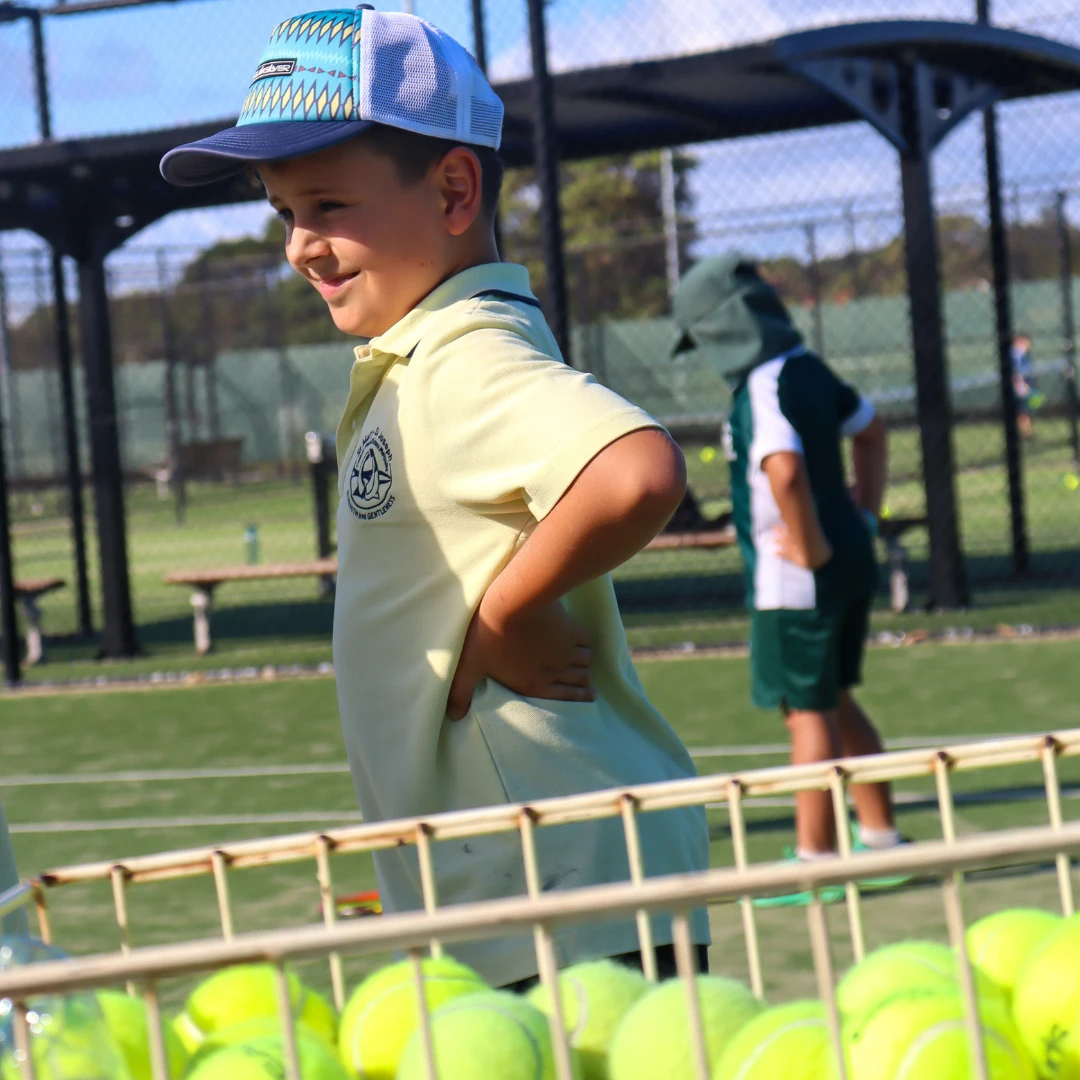
If you're wondering whether tennis is the right sport for your child, this guide covers everything you need to make that call: the real benefits, what age to start, how tennis compares to other sports, what to expect at the first lesson, and how to keep your child motivated once they're in.
Think of it as the starting point for everything else on this site about kids tennis at Rushcutters Bay Park Tennis.
Why Tennis? The Benefits for Kids
Tennis sits in a useful category of sport: it builds real physical skill, it's genuinely social, and a child can keep playing it for the rest of their life. Sport Australia's physical literacy framework is a useful lens here. It describes four areas that build a lifelong relationship with movement: the physical skills themselves, the psychological confidence and motivation to move, the social skills that come from playing with others, and the cognitive understanding of how and when to apply a skill.1 Tennis develops all four at once, which is part of why it's used so widely in junior sport development programs.
Physical development. Tennis is a genuine full-body workout disguised as a game: running, changing direction, hand-eye coordination, and gross motor skill development all happen naturally during a session. The Australian Government's healthdirect service recommends children aged 5 to 12 get at least 60 minutes of moderate-to-vigorous activity most days, and a structured tennis session is an easy way to bank a meaningful chunk of that.2 For younger children, the movement-based Blue Stage sessions in Tennis Australia's Hot Shots framework focus specifically on the coordination and balance skills that later support hitting a moving ball.
Mental and social development. The benefits go well beyond fitness. The United States Tennis Association's research on youth mental health points to several specific effects: tennis gives children a genuinely social, connected experience rather than an isolating one; the physical activity itself helps regulate mood and reduce anxiety; and learning to manage mistakes on court (a double fault, a missed sitter) builds a kind of emotional resilience that carries over into life off the court.3 Coached well, tennis also teaches children to interact respectfully with an opponent while still trying their hardest to win, which is a subtler social skill than it sounds.
What Age Should My Child Start?
Short version: most children can start from around age three, through modified, play-based programs like Tennis Australia's Hot Shots Blue Stage. The four Hot Shots stages (Blue, Red, Orange, Green) scale the ball, racquet, and court to a child's age and skill rather than dropping them into adult-sized equipment too early.
We've written a full breakdown of this, including the exact age ranges for each stage and the signs that tell you your child is ready regardless of their birthday, in What Age Should Kids Start Tennis? That's the best place to go if age is the main thing holding you back from booking a trial.
Tennis vs Other Sports: How Does It Compare?
Parents often ask how tennis stacks up against swimming, team sports, or dance, especially when a child's time is limited. A few honest points of comparison:
- Versus swimming. Swimming is an excellent, essential life skill and a fantastic low-impact full-body activity, but it's largely solitary during actual swim time. Tennis adds a social, back-and-forth element (even in a group lesson, a child is constantly reacting to another person), plus decision-making under light pressure that swimming doesn't really require.
- Versus team sports (soccer, netball, football codes). Team sports are brilliant for group belonging, but a child's individual contribution can get lost in a big team, and game time isn't always evenly shared. Tennis gives a child direct, immediate feedback on their own play. Every point is clearly theirs, which some children find motivating and others find pressured; it depends on the child.
- Versus individual sports like gymnastics or dance. These build extraordinary body awareness and discipline, but usually with less of the social, game-based interaction tennis offers.
None of this makes tennis "better." It's a genuinely good first sport because it blends individual accountability with social interaction, and because it's realistically a lifelong sport. Plenty of Rushcutters Bay Park Tennis members play well into their seventies and eighties; that's a rarer claim for most contact team sports.
Is Tennis Good for Shy Kids?
Yes, often more so than team sports. In practice, quieter or more reserved children can find tennis easier to settle into than a large team sport, because the social demands are smaller and more structured. In a Hot Shots group class, a shy child interacts with the coach and a handful of peers in short, predictable turns, rather than needing to assert themselves in a fast-moving pack of fifteen teammates. There's also a natural "next step down" if a group class still feels like too much too soon: a block of private lessons lets a child build basic confidence and skill one-on-one with a coach first, before moving into a group setting.
What to Expect at Your Child's First Lesson
First lessons are deliberately low-pressure. Here's the general shape of one, based on how our Hot Shots sessions run:
- 1Arrival and equipment. Racquets and balls are provided for trial and first sessions, so there's nothing to buy in advance.
- 2Warm-up and movement games. Sessions typically open with simple movement and coordination games rather than going straight to hitting.
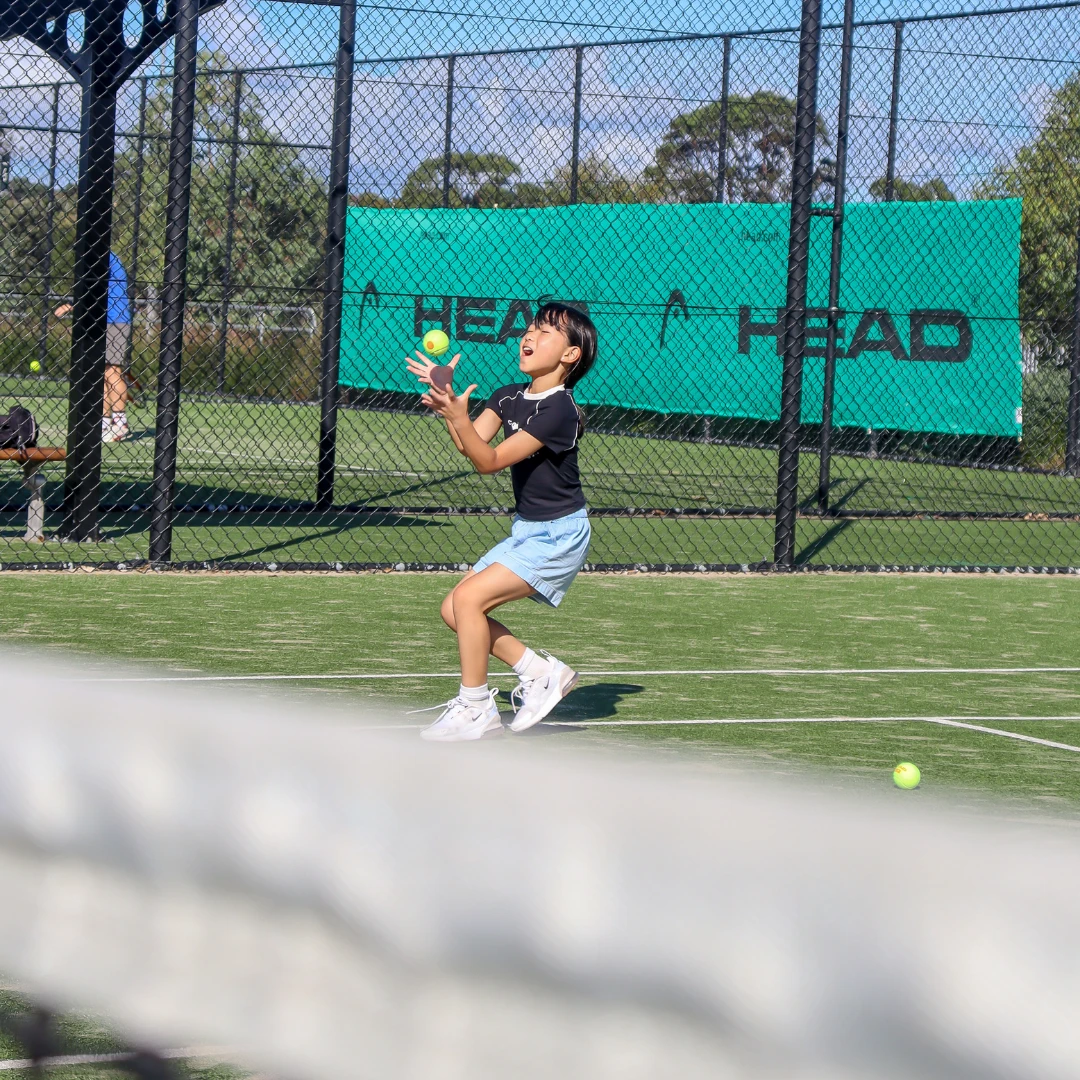
- 3Introduction to the ball and racquet. Younger or newer players start with basic bouncing, catching, and simple contact drills using softened, low-compression balls.
- 4Mini-games. Most sessions end with a simplified, fun version of a real point or rally, scaled to the child's stage, so they get a taste of "real tennis" even in week one.
- 5A quick coach chat. After the session, the coach will usually give you a read on which class or stage suits your child going forward.
The best way to see this in person, with no commitment, is to sign up now for a free trial and let a coach assess your child directly. You can also check the Hot Shots schedule to find a class time that fits your week.
What Should My Child Wear and Bring?
Keep it simple for a first lesson: comfortable athletic clothing your child can move freely in, and closed-in shoes (running shoes are fine; sandals or thongs aren't safe on court). Racquets and balls are provided for trial sessions, so there's no need to buy equipment before you've confirmed your child enjoys it.
If your child continues on, a correctly sized junior racquet (not a cut-down adult racquet) makes a real difference to how quickly they progress. We've put together a full guide to finding the right junior racquet size and a breakdown of racquet specifications if you want to understand what all the numbers on a junior racquet actually mean.
Tennis Etiquette for Kids
Tennis has more built-in etiquette than most junior sports, and teaching it early is part of what makes the game enjoyable for everyone on court. The basics we cover with young players:
- Waiting for a point to finish before walking behind or across another court.
- Calling their own lines honestly, even against themselves, once they're old enough to play points.
- Returning stray balls promptly to neighbouring courts rather than leaving them.
- Applauding a good shot, including the opponent's, rather than only celebrating their own points.
- Shaking hands or saying "good game" at the end of a match or session.
None of this needs to be taught as a lecture. In practice, coaches model it constantly during group sessions, and most children pick it up naturally within a few weeks of regular play.
Keeping Kids Motivated
Motivation dips are normal, especially for younger players once the novelty of a new sport wears off. A few things that genuinely help:
- Short-term goals over long-term ones. "Get through today's warm-up game" motivates a six-year-old far more than "improve your backhand this term."
- Low-stakes competitive moments. Friendly, well-run events like our Hot Shots Tournament give kids something to look forward to without the pressure of a serious competition.
- A change of format during holidays. Our holiday tennis camps break up the routine of weekly term classes with a few concentrated, high-energy days, which often reignites interest for a child who's gone a bit flat during term.
- Letting them see progress, not just hear about it. Simple markers, like moving up a ball colour stage, work well because they're visible and concrete to a child.
The Active Kids NSW Rebate
If cost is part of your decision, it's worth knowing about the NSW Government's Active and Creative Kids Voucher program. As of the most recent guidelines, it provides a $50 rebate per voucher, with two vouchers available each year (from mid-January and mid-July), for school-enrolled children in families receiving Family Tax Benefit Part A.4 Eligibility and voucher availability can change, so it's worth confirming current details on the Service NSW website and checking with our front desk that a voucher can be applied to your child's enrolment.
What We've Seen at Rushcutters Bay Park Tennis
In practice, the families who get the most out of kids tennis tend to share one thing in common: they treat the first term as an experiment, not a commitment. They come in with no fixed idea of whether their child will love it, try a free trial or a short holiday camp block first, and let the child's own reaction guide whether to continue into a full term.
The families who struggle more tend to commit to a full term of weekly private lessons before their child has had any low-pressure exposure to the sport at all, which can turn an ordinary bout of first-week nerves into a bigger, more discouraging decision than it needs to be.
Ready to see if tennis is the right fit?
Sign up now for a free trial and let one of our coaches meet your child on court, with racquets and balls provided.
Sign up now for a free trialFrequently Asked Questions
What are the benefits of tennis for kids? +
Tennis builds physical skills like coordination, balance, and fitness, alongside mental and social benefits like confidence, resilience after mistakes, and genuine social connection with other players.
What age should my child start tennis? +
Most children can start from around age three through modified programs like Tennis Australia's Hot Shots Blue Stage. See our full age-by-age guide for the complete breakdown by stage.
Is tennis good for shy kids? +
Often, yes. The social demands of a small group tennis class are more structured and predictable than a large team sport, and private lessons offer an even lower-pressure one-on-one starting point for a child who needs it.
How do I know if my child is ready for tennis? +
Look for basic throwing and catching ability, the ability to follow a simple two-step instruction, and enough attention span to manage a small group setting for 15 to 30 minutes. Age is a rough guide; a coach assessing your child directly at a free trial is a better one.
What should my child wear to their first tennis lesson? +
Comfortable athletic clothing and closed-in shoes. Racquets and balls are provided for trial sessions, so there's nothing to buy beforehand.
Is tennis good exercise for kids? +
Yes. A typical session involves running, direction changes, and hand-eye coordination work, which contributes toward the 60 minutes of daily moderate-to-vigorous activity recommended for children aged 5 to 12 by Australia's healthdirect service.
How do I prepare my child for their first tennis lesson at Rushcutters Bay Park Tennis? +
Bring comfortable clothes and closed-in shoes, arrive a few minutes early, and keep expectations light. First lessons focus on movement games and simple ball skills, not formal technique.
Is tennis better than swimming or team sports for kids? +
Not better, just different. Tennis blends individual accountability with social interaction and is realistically a lifelong sport, which makes it a strong first-sport option, but swimming and team sports offer their own distinct benefits.
What tennis etiquette should I teach my child? +
The basics: wait for a point to finish before crossing a court, call their own lines honestly, return stray balls promptly, and shake hands or say "good game" at the end of a session. Coaches reinforce all of this during group classes too.
How can I keep my child motivated to keep playing tennis? +
Focus on short-term, visible goals rather than long-term ones, use low-pressure events like our Hot Shots Tournament or holiday camps to break up routine, and let your child see concrete progress, like moving up a ball stage, rather than just hearing about it.
Summary
Tennis offers a genuine mix of physical, mental, and social development, backed by frameworks like Sport Australia's physical literacy model, and it's realistically a sport your child can keep playing for life. Most children can start from around age three through Tennis Australia's Hot Shots Blue Stage, first lessons are low-pressure and play-based, and there's a $50 Active Kids NSW rebate available for eligible families to help with cost.
If tennis sounds like the right fit for your child, the easiest next step is a free trial.
About the Author
Rushcutters Bay Park Tennis Coaching Team
We're part of Sydney Sports Management Group (SSM Group), which has run junior and community tennis programs across Sydney for over 25 years. We deliver Tennis Australia and Tennis NSW affiliated Hot Shots programs directly to families across Rushcutters Bay, Elizabeth Bay, Edgecliff, Paddington, and the wider Eastern Suburbs, and partner with local schools including Darlinghurst Public, Plunkett Street Public, and Sydney Grammar on junior development.
Sources
- Sport Australia, physical literacy framework: ausport.gov.au/physical_literacy
- healthdirect (Australian Government), "Safe exercise for children": healthdirect.gov.au/safe-exercise-for-children
- USTA, "Mental health benefits of tennis for children and teens": usta.com: mental health benefits of tennis for children and teens
- Service NSW, "Active and Creative Kids Voucher": service.nsw.gov.au/active-and-creative-kids-voucher