
What Age Should Kids Start Tennis? Age-by-Age Stages From Toddler to Teen
Most children can start from age three, and the trick is matching the stage to the child, not the calendar.
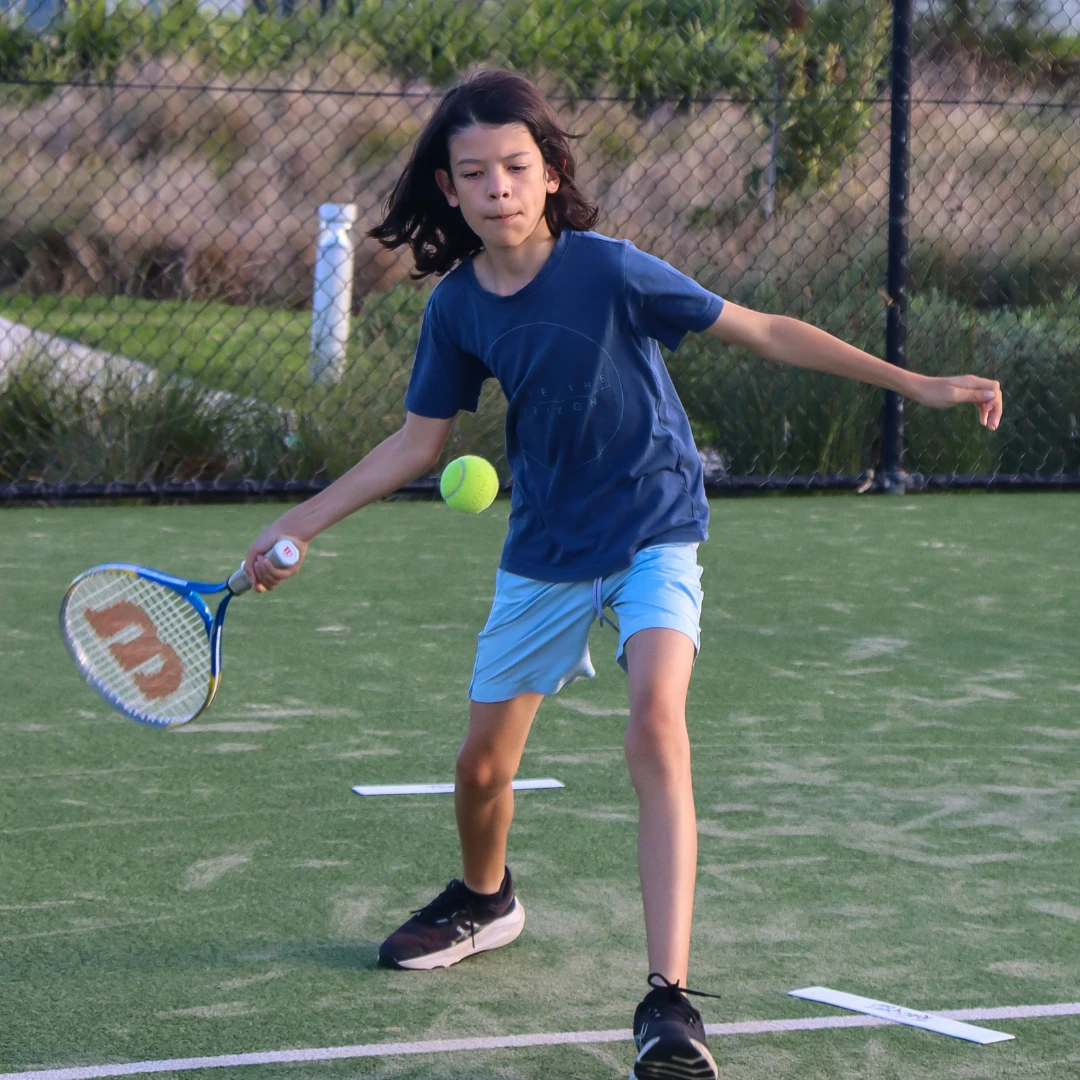
If you've been searching "what age should kids start tennis," here's the short answer: most children can start as young as three years old, thanks to modified programs like Tennis Australia's Hot Shots, which scales the court, ball, and racquet to a child's size and stage, not the other way around. There's no single "correct" age, but there is a right stage for every age, and knowing the difference makes all the difference in whether your child sticks with the sport.
This guide walks through exactly how tennis readiness breaks down by age, what to look for beyond the calendar, and how to get your child started at Rushcutters Bay Park Tennis without the guesswork.
The Short Answer: What Age Should Kids Start Tennis?
Tennis Australia's national junior pathway, Hot Shots, is built around four age-and-skill stages starting at three years old, using modified equipment so children are never trying to swing a full-size racquet at a full-speed ball on a full-size court.1 In other words, the sport has already been redesigned around early starters. You're not pushing your child into an adult version of the game too soon.
That said, "can start at three" isn't the same as "must start at three." Plenty of children have a brilliant first experience with tennis at seven, nine, or twelve. Age is the starting filter; readiness is the real filter, and we cover both below.
Why Age 3–5 Is a Genuine Starting Point (Not Too Early)
Parents are often surprised that three is a realistic starting age, mostly because they're picturing a shrunk-down version of adult tennis. That's not what early-stage tennis looks like. At three to five years old, sessions are short (often around 30 minutes), play-based, and parent-inclusive, focused on movement, balance, hand-eye coordination, and following simple instructions in a group, not technique or scorekeeping.
This lines up with broader Australian guidance on physical activity for young children. The Australian Government's healthdirect service recommends children aged 5–12 get at least 60 minutes of moderate-to-vigorous activity most days, alongside strengthening activities several times a week, while capping recreational screen time at one hour a day for children aged 2–5.2 Raising Children Network, an Australian Government–funded parenting resource, also points to structured, play-based movement activities as appropriate for preschool-aged children.3 A well-run early-stage tennis session fits squarely into that picture: it's active play with structure, not formal athletic training.
The practical upshot: starting at three to five isn't about creating a prodigy. It's about introducing movement, coordination, and social skills through a sport your child can genuinely enjoy at their size.
Tennis Australia's Hot Shots Age Stages Explained
Rather than one generic "kids' class," Hot Shots splits development into four stages, each with different balls, racquet sizes, and court dimensions:1
Blue Stage · ages 3–5+
The entry point. Foundation movement skills, balance, and social play using very low-compression balls and mini courts. This is what our Kids Tennis Coaching programs and Kinder Tennis sessions are built around for our youngest members.
Red Stage · ages 5–8+
Softer red balls and shorter 19–23 inch racquets on reduced-size courts, where children start learning to rally and apply simple tactics.
Orange Stage · ages 8–10+
A step up in ball compression and court size, introducing more advanced strategy in both singles and doubles play.
Green Stage · ages 10+
Near full-size courts with a 75%-compression ball, suitable for both recreational players and those moving toward competitive tennis.
The stages aren't rigid cut-offs. A confident seven-year-old might move through Red Stage quickly, while a less experienced nine-year-old might spend longer there before progressing. Coaches assess skill, not just age, when deciding when a child is ready to move up. Once a child is comfortable rallying and enjoying the competitive side of the game, events like our Hot Shots Tournament give them a low-pressure way to test those skills in a match setting.
Signs Your Child Is Ready to Start Tennis (Beyond the Calendar)
Age is a useful starting filter, but these signs matter more than the exact number:
- They can follow a simple two-step instruction ("run to the cone, then hit the ball").
- They can throw and catch a large, soft ball reasonably consistently.
- They can hold attention in a small group setting for 15–30 minutes.
- They show curiosity about hitting, throwing, or chasing a ball, even informally in the backyard or park.
- They can manage brief turn-taking without significant frustration.
A child who's a little behind on one of these at three or four isn't "too young." They'll likely just need a slower introduction, more one-on-one attention, or a bit more time before group sessions click. That's exactly the kind of gap our private lessons are designed to close, giving a child individual coaching time before or alongside group Hot Shots classes.
What We've Seen at Rushcutters Bay Park Tennis
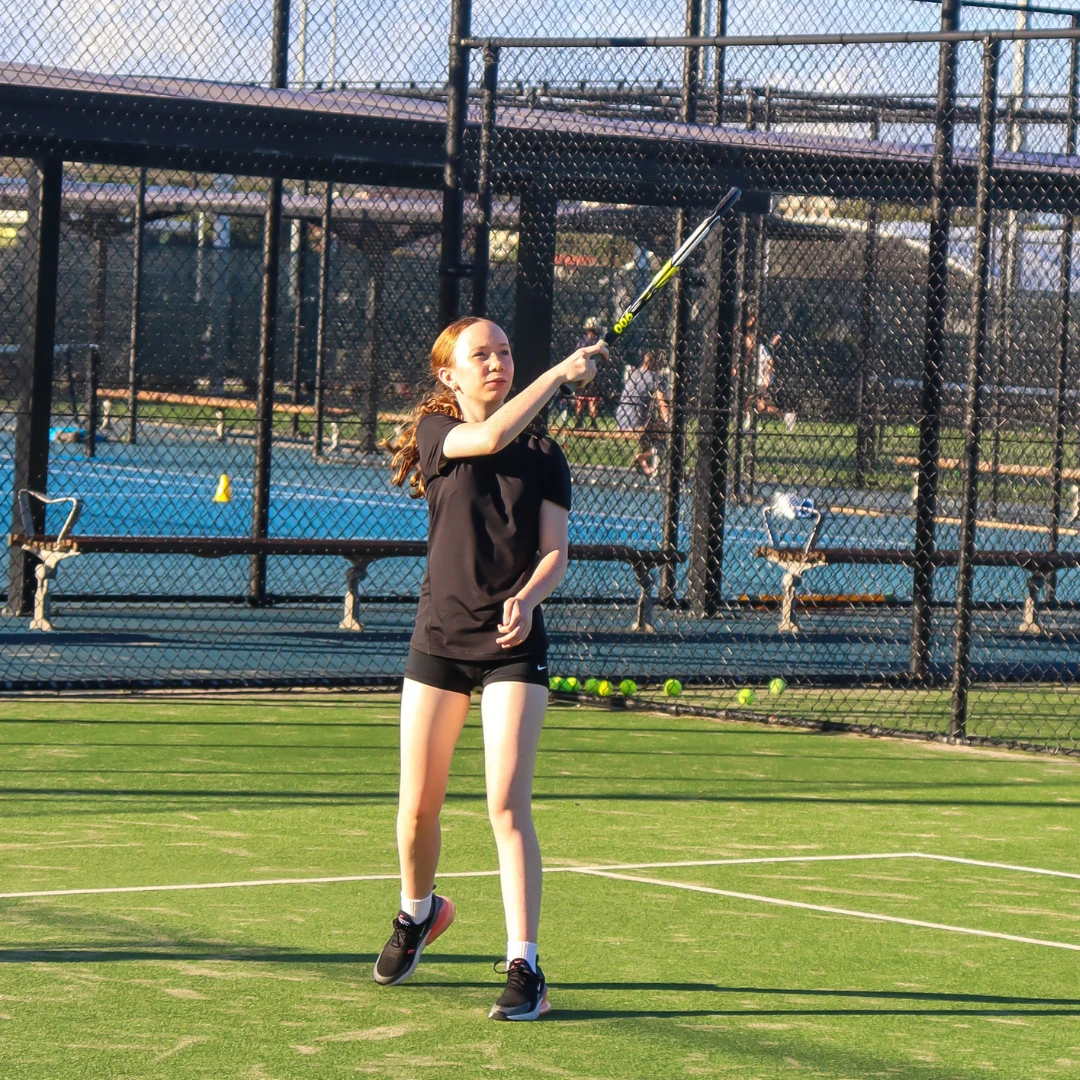
In practice, our coaching team typically sees two patterns among families starting young children in tennis. The first is parents who wait until their child is seven or eight "to make sure they're ready," only to find their child is now catching up on basic movement and coordination skills that classmates picked up at four or five through play-based Blue Stage sessions. The second is parents who start early but expect too much too soon (full rallies, real scoring, sustained focus) and end up frustrated when a three-year-old behaves like, well, a three-year-old.
The pattern that tends to work best: start early with genuinely age-appropriate expectations (short sessions, play-first, low pressure), and let the stage progression, from Blue to Red to Orange to Green, do the work of building skill over years rather than weeks. Kids who start this way tend to stay in the sport longer, because their early experience of tennis is "fun and I'm good at this," not "hard and I keep losing."
Common Mistakes Parents Make When Starting Kids Too Early or Too Late
- Starting with adult-sized equipment. A full-length racquet and a full-pressure ball make early tennis frustrating and can put unnecessary strain on a young child's technique. Modified equipment isn't a compromise. It's the correct tool for the stage.
- Judging readiness by age alone. Two five-year-olds can have very different coordination and attention spans. Coaches assessing your child directly (in a free trial, for example) is a better gauge than a birthday.
- Waiting for "perfect" readiness. There's rarely a moment when a young child is fully ready for a brand-new activity. Some hesitation in the first session or two is normal, not a sign to delay.
- Skipping the fun stages to "get to real tennis." Rushing a child out of play-based Blue/Red Stage learning before their coordination has caught up often creates avoidable frustration later.
- Starting an older child (8, 10, 12+) and assuming they're "behind." Tennis Australia's stage system is skill-based, not just age-based. An older beginner simply starts at the stage that matches their current ability, often progressing faster than a younger child would.
How to Get Started: A Simple Checklist
- 1Note your child's age and rough coordination level using the signs above. This tells you roughly which Hot Shots stage to expect.
- 2Sign up now for a FREE TRIAL so a coach can assess your child directly rather than guessing from age alone.
- 3Check the Hot Shots schedule for a class time that suits your family.
- 4Bring comfortable clothes and closed-in shoes; racquets and balls are provided for trial sessions.
- 5Consider the school holidays as a low-commitment entry point via our holiday tennis camps if a weekly term commitment feels like a big first step.
- 6Talk to your coach after the first session about which stage and class format fits best going forward.
Not sure which stage suits your child?
Sign up now for a free trial and one of our coaches will assess your child on court, with racquets and balls provided.
Sign up now for a free trialFrequently Asked Questions
What is the youngest age a child can start tennis?
Most programs, including Tennis Australia's Hot Shots, accept children from around age three in the entry-level Blue Stage, which uses very low-compression balls and mini courts designed for that age group.
Is three years old too young to start tennis lessons?
No, provided expectations match the stage. At three, sessions are short, play-based, and focused on movement and coordination rather than technique or scoring.
What is Hot Shots tennis, and how does it relate to my child's age?
Hot Shots is Tennis Australia's national junior pathway, split into four stages (Blue, Red, Orange, Green) based primarily on age and skill, each using different ball compressions, racquet sizes, and court dimensions to match a child's development.
Does my child need to already know how to hit a ball before starting?
No. Entry-level classes assume no prior experience and start with basic movement, throwing, and catching before introducing racquet skills.
What equipment does my child need for their first tennis lesson?
For a trial or first class, comfortable athletic clothing and closed-in shoes are usually enough, and racquets and balls are provided. If your child continues, a properly sized junior racquet (not a cut-down adult one) is worth investing in.
How long are tennis lessons for young children?
Sessions for the youngest age group are typically shorter (around 30 minutes) to match attention spans, gradually increasing in length as children move into Red and Orange Stage classes.
My child has never played an organised sport before. Can they still start tennis?
Yes. Entry-level tennis is designed for first-time sport participants, with an emphasis on fun, movement, and basic coordination rather than assuming prior sporting experience.
My child is 8, 10, or 12 and hasn't played tennis before. Have we missed the window?
No. The Hot Shots framework is skill-based as well as age-based, so an older first-time player simply starts at the stage matching their current ability and often progresses through it more quickly than a younger beginner would.
How much does it cost to start kids tennis lessons at Rushcutters Bay Park Tennis?
Pricing varies by program and term. The best way to get current pricing for your child's age group is to sign up now for a FREE TRIAL, where a coach can also confirm the right starting stage.
How do I know if my child is ready, beyond just their age?
Look for the ability to follow simple two-step instructions, basic throwing/catching, curiosity about ball games, and the ability to sit in a small group for 15–30 minutes. A child who's behind on one of these isn't unready. They may just need a slower introduction or some individual coaching first.
Summary
Most kids can start tennis from age three, provided the program is genuinely built around their stage: short, play-based, low-pressure Blue Stage sessions rather than adult tennis scaled down. From there, Tennis Australia's Red, Orange, and Green stages carry a child from toddler through to competitive teen play. If your child is older and starting for the first time, they're not behind. They simply begin at the stage that matches their current skill.
Ready to see which stage suits your child? Sign up now for a FREE TRIAL at Rushcutters Bay Park Tennis.
About the Author
Rushcutters Bay Park Tennis Coaching Team
We're part of Sydney Sports Management Group (SSM Group), which has run junior and community tennis programs across Sydney for over 25 years. We deliver Tennis Australia and Tennis NSW affiliated Hot Shots programs directly to families across Rushcutters Bay, Elizabeth Bay, Edgecliff, Paddington, and the wider Eastern Suburbs, and partner with local schools including Darlinghurst Public, Plunkett Street Public, and Sydney Grammar on junior development.
Sources
- Tennis Australia, "About Hot Shots": tennis.com.au/play/kids-tennis/hot-shots/about-hot-shots
- healthdirect (Australian Government), "Safe exercise for children": healthdirect.gov.au/safe-exercise-for-children
- Raising Children Network, "Play ideas for physical activity: 3–5 years": raisingchildren.net.au/preschoolers/play-learning/play-preschooler-development/movement-play-preschoolers